
One Page Workpaper to Reconcile Amazon 1099-K for U.S. Sellers

Start by pulling your 1099-K and the Amazon Date Range Summary for January 1 through December 31. The reconciliation itself is just a one-page workpaper that explains the gap between the two: sales tax, refunds, FBA reimbursements, and timing differences. Box 1a will almost always be higher than your actual revenue, and that’s expected. Success looks like a short document that bridges the two numbers, line by line, so you or your CPA can defend the difference if the IRS ever asks.
TL;DR:
- Most discrepancies between the 1099-K and your books stem from sales tax, refunds, timing differences, and inventory reimbursements, not errors.
- Pulling and comparing four key reports,1099-K, the Date Range Summary, Transaction, and Settlement reports,helps identify the specific causes of variances.
- Categorizing and documenting each difference, especially refunds and reimbursements, is essential for accurate reconciliation and defending IRS scrutiny.
- Automating reconciliation through software is advantageous for high-volume sellers, ensuring continuous monitoring and minimizing manual errors.
- Conducting periodic checks after each settlement period prevents year-end surprises and keeps records compliant with IRS audit requirements.
Table of Contents
- What Amazon 1099-K Reconciliation Actually Requires
- Which Amazon Reports You Need To Pull
- Why Your Numbers Don’t Match (and How to Tell Which Reason Applies)
- A Step-by-Step Reconciliation Workflow You Can Run This Week
- What to Hand Your CPA (or Keep for an Audit)
- How Often You Should Actually Be Doing This
- Where Automation Actually Saves You Time
- Where to Focus When You’re Short on Time
- Get Your Reconciliation Off Your Plate Entirely
- Sources
- FAQ
What Amazon 1099-K Reconciliation Actually Requires
Reconciling your Amazon 1099-K means proving, on paper, why the number in box 1a doesn’t match your books. It almost never will match, and that’s by design, not a mistake on Amazon’s part or yours.
Box 1a reports the gross amount of payment card and third party network transactions for the calendar year. Per the Instructions for Form 1099-K, gross means before any adjustments for refunds, fees, discounts, or sales tax. Amazon calculates it on the transaction date, not the date the money hit your bank account. That single detail explains a huge chunk of seller confusion every January.
Here’s what gets swept into that gross figure whether you kept the money or not:
- Product sales revenue
- Shipping charges you collected from buyers
- Gift wrap fees
- Sales tax and marketplace facilitator tax Amazon collected and remitted on your behalf
- The full sale amount on orders that were later refunded
The gap can be substantial. A seller with significant sales might see a 1099-K well above that number once sales tax and shipping are included, while their actual taxable revenue after refunds and fees is considerably lower.
None of this means Amazon made an error. The IRS uses the 1099-K as a matching document, comparing what platforms report against what you report on your return. If your Schedule C shows revenue meaningfully lower than box 1a with no explanation, that mismatch is exactly the kind of thing that draws a follow-up notice. The IRS Form 1099-K FAQs confirm sellers must report income accurately even when a 1099-K under or overstates the true figure. A gross-to-net gap isn’t a problem. An undocumented gross-to-net gap is.
Which Amazon Reports You Need To Pull
You need four exports, and Seller Central keeps all of them in slightly different places. Grab them in this order.
- The 1099-K PDF itself. Go to Reports, then Tax Document Library. Download the form and, if available, the monthly breakdown Amazon provides alongside it. That monthly split is useful later when you’re isolating which month drove a spike.
- Date Range Summary. Under Reports, then Payments, set the range to January 1 through December 31 of the tax year. This report gives you subtotals for product sales, shipping, gift wrap, and tax collected. Add the income and tax subtotal lines together and you’ll land close to box 1a. This is the report most accountants reach for first when a 1099-K looks off, according to seller-forum guidance on reconciling the annual 1099-K.
- Transaction Reports. These give you line-level detail, order by order, with dates, amounts, and transaction types. Use them when the summary numbers don’t match and you need to hunt for the specific orders causing the variance.
- Settlement Reports. These cover two-week disbursement periods and show what actually got deposited into your bank account after Amazon deducted fees. They’re the bridge between gross sales and net cash, and they’re what you’d hand a CPA to show timing differences.
Export everything as CSV, not just viewing it on-screen. Seller Central reports can time out or reformat when you switch date ranges, and a saved CSV is your permanent record if a report later becomes unavailable.
Pro Tip: Pull December and January settlement reports for both the tax year and the year before and after. Orders placed in late December sometimes settle in early January, and that boundary is where most timing discrepancies hide.
Watch the time zone setting too. Amazon reports run on Pacific Time in Seller Central, while your accounting software probably logs transactions in your local time zone. A sale at 11:45 PM Eastern on December 31 can show up as January 1 in Pacific Time, shifting it into the wrong tax year on paper even though the cash and the customer both belong to December. For a full rundown of which reports to keep on hand year round, BeanHawk’s guide to the Amazon reports every seller must pull breaks down export cadence in more detail.
Why Your Numbers Don’t Match (and How to Tell Which Reason Applies)
Every seller who has stared at a 1099-K that’s $30,000 higher than their bookkeeping software has asked the same question: where did that money go? It didn’t go anywhere. It was never yours to begin with, or it left through a mechanism your books recorded differently than Amazon did.
Five causes account for almost every discrepancy sellers run into:
- Sales tax and marketplace facilitator remittance. Amazon collects sales tax on your behalf in most states and sends it directly to tax authorities. That tax counts toward your gross 1099-K figure but was never revenue you kept.
- Refunds and returns. Because box 1a reports on a payment-date basis, a sale that gets refunded later still counts in gross volume for the month it was paid. Your accounting software might net the refund against the original sale, while the 1099-K shows both the sale and never subtracts the refund from the gross total.
- Timing and cutoff differences. A transaction dated December 30 might settle and deposit in January. Your books might record revenue on the order date, the settlement date, or the deposit date, depending on your accounting method, and none of those three dates has to match what the 1099-K assumes.
- FBA reimbursements and marketplace credits. Reimbursements for lost or damaged inventory show up as separate ledger events, not sales, and they typically fall outside the 1099-K’s gross payment definition entirely. If your bookkeeping lumps them into revenue, you’ll see a mismatch that has nothing to do with Amazon’s reporting and everything to do with your own categorization.
- Chargebacks, promotions, and multi-channel aggregation. If you sell on Amazon and also run a Shopify store or eBay listings tied to the same payment processor, a single 1099-K might aggregate volume across channels in ways that don’t map cleanly to any one platform’s sales report.
One consistent finding across practitioner write-ups: sellers who treat the 1099-K as their bookkeeping source of truth end up chasing a number that was never meant to equal net revenue in the first place, per LevelCFO’s analysis of the mismatch.
The fix isn’t forcing your books to equal box 1a. It’s documenting, category by category, why they don’t. That distinction changes how you approach the entire reconciliation process, because you stop hunting for a matching number and start building an explanation.
A Step-by-Step Reconciliation Workflow You Can Run This Week
This is the process. Run it once and you’ll have a template you can reuse every year, or every settlement period if you want to stay ahead of problems instead of discovering them in March.
- Start with box 1a and the monthly breakdown. Write down the total from your 1099-K PDF, and if Amazon provided a month-by-month split, note that too. This is your target number, not your final number.
- Pull the Date Range Summary for the same calendar year. Add the product sales, shipping, gift wrap, and tax collected subtotals. Compare that sum to box 1a and write down the variance in dollars.
- Cross-reference Transaction Reports against Settlement Reports. If the variance from step 2 is small, this step may not be necessary. If it’s large, match transaction IDs between the two reports to find where individual orders diverge, and where possible tie settlement totals to actual bank deposits.
- Build your adjustment lines. For each category of difference, create one line item: sales tax collected, refunds processed, FBA reimbursements received, chargebacks, and timing differences for orders that straddle the year-end cutoff. Attach the specific export (screenshot or CSV excerpt) that supports each line.
- Total your adjustments and check your math. Box 1a minus your adjustment lines should land close to your actual reported revenue. A remaining variance of a few hundred dollars on a six-figure 1099-K is normal; several thousand dollars unexplained means you missed a category or a report is incomplete.
- Document the remaining variance and your remediation path. If you genuinely can’t explain a gap after working through every category, note that in your workpaper and flag it for your CPA. If the 1099-K itself looks wrong, not just different from your books, contact Amazon Seller Support to request a correction.
Pro Tip: Keep your adjustment categories consistent year over year. If you label FBA reimbursements one way in 2025 and a different way in 2026, you’ll lose the ability to spot-check trends, like whether reimbursement volume is climbing because more inventory is getting lost or damaged in transit.
A few line items deserve extra attention because they trip up even experienced sellers. Refunds are the biggest one: if you’re on accrual accounting, your books likely net the refund against the sale in the same reporting period, but the 1099-K counted the original sale in gross regardless of what happened next. That means your refund adjustment line should equal the full dollar value of everything refunded during the tax year, not just the ones tied to sales made in that same year.
FBA reimbursements deserve their own line, separate from refunds, because they represent money Amazon owes you for inventory it lost or damaged, not money customers paid you. If you’re not tracking these systematically, you’re probably missing some. Sellers who rely on manual, occasional checks of their reimbursement ledger tend to catch a fraction of what’s actually owed, simply because Amazon doesn’t proactively surface every eligible case.
Once you’ve built the adjustment lines, the last step is turning your work into something a third party can read cold, without you sitting next to them explaining it.
What to Hand Your CPA (or Keep for an Audit)
Your CPA doesn’t need every CSV you exported. They need one summary page and the backup that supports it.
The summary should show three numbers in sequence: the 1099-K box 1a total, your itemized adjustments, and the net taxable revenue you actually reported Each adjustment line gets a one-sentence explanation and a reference to its source report, following the same workpaper structure LevelCFO recommends for defending 1099-K variances.
Attach these supporting exports behind the summary page:
- Date Range Summary for the full tax year
- Relevant settlement report excerpts covering year-end boundary dates
- A refund total report or export showing total refunds issued
- Your sales tax collected report, broken out by state if your accounting software supports it
- A list of FBA reimbursements received during the year, with dates and amounts
If the 1099-K itself contains an actual error, wrong gross amount, wrong tax ID, duplicate reporting, request a correction from Amazon through Seller Support before you file. If the deadline arrives and Amazon hasn’t corrected it, file with your accurate numbers and attach an explanatory statement, a practice the IRS FAQ on incorrect 1099-Ks supports as the standard path forward. Pro Tip: Scan every supporting document to PDF and store them in a single folder, named by tax year, before you file. A guide on scanning receipts and keeping them searchable is worth the twenty minutes if your current system is a shoebox of screenshots.
How Often You Should Actually Be Doing This
Once a year, in April, is too late to catch most problems. By then the errors have compounded for eleven months and you’re reconstructing history instead of checking current work.
Monthly reconciliation is the floor, not the target. Active sellers do better checking every settlement period, roughly every two weeks, or weekly if order volume is high, a cadence accounting practitioners increasingly recommend as standard practice rather than best-case advice.
- Set a recurring calendar reminder tied to your settlement schedule, not an arbitrary date
- Import settlement data into your accounting software as soon as it posts rather than batching it quarterly
- Flag any settlement where the deposit amount looks off relative to your typical range, before you forget why
Pro Tip: Keep reconciliation workpapers and every supporting report for at least three years, and ideally seven, matching the IRS’s own audit lookback window. A simple year-by-year folder structure beats a search through old email attachments every time.
Where Automation Actually Saves You Time
Manual reconciliation works fine when your order volume is low and your FBA activity is simple. It gets harder to sustain once you’re running thousands of orders a month across warehouses, because the ledger events driving reimbursements, lost units, damaged inventory, warehouse discrepancies, happen continuously, not on your reconciliation schedule.
Continuous monitoring of FBA ledger events catches those anomalies as they occur instead of during a monthly sweep, which matters because reimbursement claim windows aren’t unlimited. Automated settlement posting to accounting platforms like QuickBooks or Xero also solves a quieter problem: it creates consistent matching keys between your settlement data and your books, which is exactly what makes a fast tie-out possible instead of a multi-hour manual match. Automation earns its cost once your order volume makes manual checks genuinely time consuming rather than a mild inconvenience.
Where to Focus When You’re Short on Time
If you only have an hour before a filing deadline, skip the perfect reconciliation and document the adjustments that actually change your taxable income: sales tax collected, refunds processed, and FBA reimbursements received. Those three categories explain most of the gap between box 1a and reality.
Running a small reconciliation every settlement period beats a single annual scramble, because errors compound quietly when nobody’s watching. And if your product catalog or order volume has grown past what a spreadsheet can track cleanly, that’s the signal to bring in a CPA or an automated reconciliation service rather than keep pushing manual checks past their useful limit.
, Tim
Get Your Reconciliation Off Your Plate Entirely
If the workflow above sounds manageable for one seller with a few hundred orders a year, it sounds like a part-time job once you’re running thousands. A software solution can monitor your FBA ledger events continuously, so lost and damaged inventory reimbursements get flagged and claimed instead of quietly expiring, and it can post settlement data straight into QuickBooks or Xero with the matching detail your reconciliation workpaper actually needs.
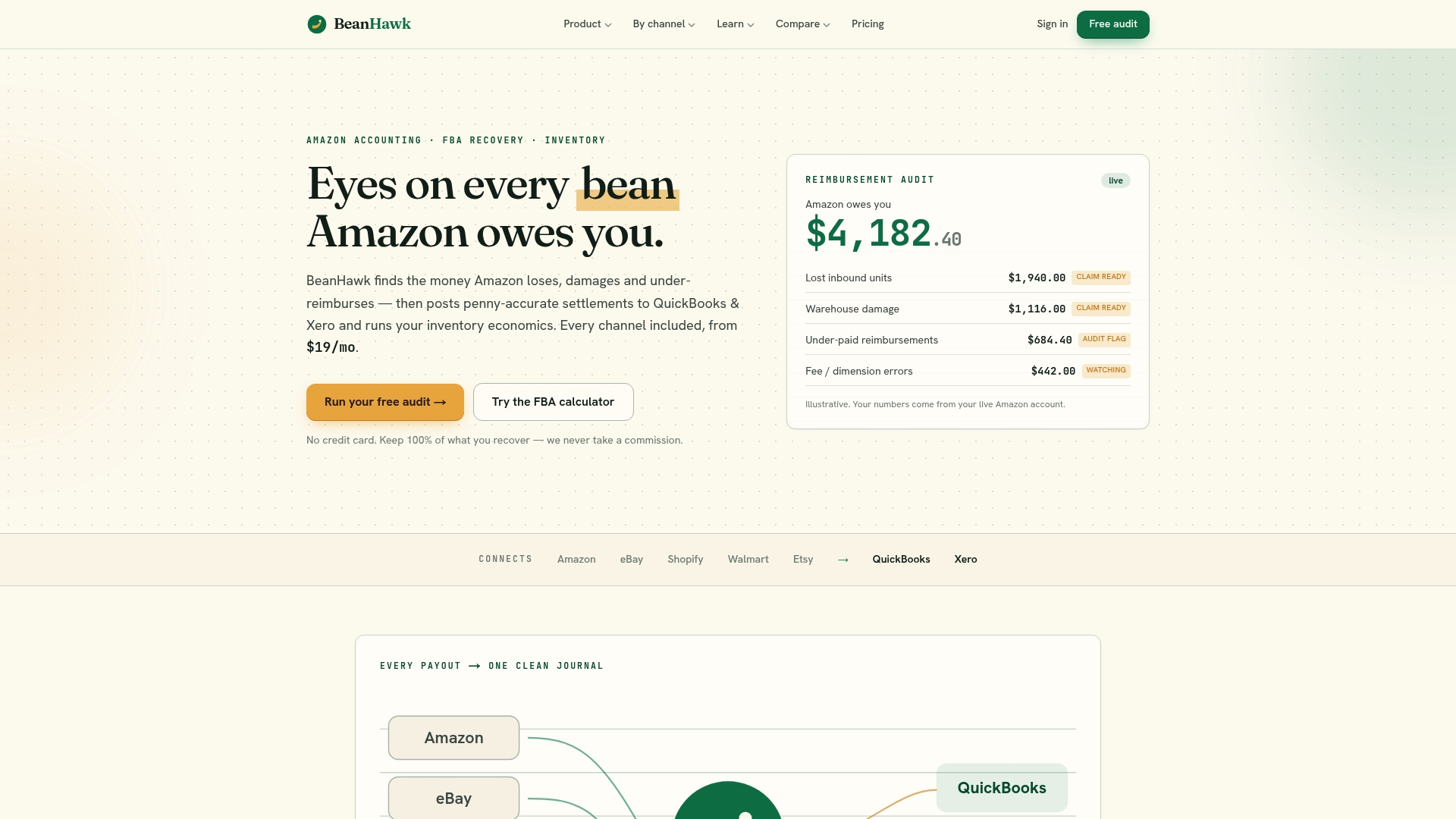
The practical benefit isn’t just less manual work, it’s fewer unexplained variances staring back at you every December. Instead of exporting four reports and cross-referencing transaction IDs by hand, you get centralized reporting that already reflects what Amazon owes you and what’s already been posted. If you’re curious whether reimbursements are slipping through your current process, start with a look at what Amazon owes you for lost or damaged inventory and see how much of that has gone unclaimed. A limited audit service is often offered if you want a straight answer before committing to anything further.
Sources
- Instructions for Form 1099-K
- Why Your 1099-K Doesn’t Match Seller Central (And What to Tell Your CPA) | LevelCFO
- How to Reconcile Your 2024 Amazon 1099-K (Seller Forums)
FAQ
What Is an Amazon Reconciliation Report?
It’s not a single report Amazon generates for you. It’s a workpaper you build yourself, comparing your 1099-K to the Date Range Summary, Transaction Reports, and Settlement Reports, with adjustment lines explaining every difference.
How Many Amazon Sellers Make Over $100,000?
Publicly available figures on seller revenue distribution aren’t consistently tracked by any single authoritative source, so a precise percentage for higher seller revenues isn’t something we can state reliably here.
Does Amazon Pay Tax in the USA?
Amazon collects and remits sales tax on behalf of third-party sellers in most states under marketplace facilitator laws, and that collected tax shows up in your 1099-K gross figure even though it was never your revenue. Amazon separately pays its own corporate income taxes as a company, which is a distinct issue from seller tax reporting.
Is FBA Still Profitable in 2026?
Profitability depends entirely on product margins, fee structure, and how well a seller manages reimbursements and inventory costs, not on the FBA model itself. Sellers who reconcile regularly and claim eligible reimbursements tend to protect margins better than those who let ledger discrepancies go unchecked.
What Do I Do if My 1099-K Doesn’t Match My Records?
Build the adjustment workpaper covering sales tax, refunds, reimbursements, and timing differences first. If a genuine variance remains after that, contact Amazon Seller Support for a correction, and if the deadline passes without one, file using your accurate figures with an attached explanation.