
Stop Hidden FX Losses: 4 Multi Currency Amazon Payout Paths for Accountants

Amazon gives sellers four distinct payout paths: Seller Wallet, the Amazon Currency Converter for Sellers (ACCS), standard disbursements, and Express Payout. For most sellers, the right move is holding balances in Seller Wallet to pay suppliers directly and avoid a second conversion, or switching to ACCS if you’d rather Amazon handle currency conversion automatically. Whichever path you pick, your books still need to translate every payout back into USD for tax purposes.
TL;DR:
- Holding balances in Seller Wallet allows manual control over currency conversions and direct supplier payments, reducing hidden conversion fees.
- Linking all regional Amazon accounts aggregates cross-currency proceeds, enabling better volume-tier discounts and lowering overall conversion costs.
- Opting for ACCS automates currency conversions with volume-based discounts, best for sellers who prefer less manual management.
- Using Express Payout can deliver funds within 24 hours for eligible sellers, with most currencies arriving in one business day, speeding up cash flow.
- Proper reconciliation of transfer rates and timely tax reporting are critical to prevent hidden FX gains or losses from mismatched rates and inconsistent book entries.
Table of Contents
- What Amazon’s Multi Currency Payout Options Actually Do
- How Amazon Calculates Your Exchange Rates and Fees
- Payout Timing and How Express Payout Speeds Things Up
- Accounting and Tax Rules Behind Multi Currency Payouts
- A Checklist for Cutting FX Drag on Every Payout
- How Beanhawk Fits Into Your Multi Currency Reconciliation
- The Playbook Most Sellers Get Backward
- Get Your Reconciliation Handled Alongside Your Payouts
- Sources
- FAQ
What Amazon’s Multi Currency Payout Options Actually Do
Each option solves a different problem, and picking the wrong one is usually what causes sellers to bleed money on conversion fees they never see itemized anywhere.
Amazon Seller Wallet works like a multi-currency holding account. You can:
- Hold balances and convert to more than 20 currencies on your own schedule
- Set up automatic transfers weekly, bi-weekly, or monthly instead of manual pulls
- Pay US and Hong Kong based suppliers directly in USD, skipping a currency round-trip
ACCS takes the opposite approach. It automatically converts your proceeds into your local currency and deposits them to your bank, with pricing that drops as your cross-currency volume grows. It’s built for sellers who want zero manual steps, not maximum control.
Standard disbursements sit between the two: Amazon converts and deposits on its normal cycle without the scheduling flexibility of Seller Wallet or the volume discounts of ACCS. Express Payout, covered below, is a speed layer you opt into on top of whichever base option you’re using.
How Amazon Calculates Your Exchange Rates and Fees
Amazon pulls its exchange rate from a third-party provider on the day you initiate a transfer, and you can see that rate before you confirm anything. The bigger cost driver is volume tier placement, which is where most sellers leave money on the table without realizing it.
ACCS pricing is based on your trailing 12-month cross-currency net proceeds. The more you convert, the lower your rate tier drops, but only if your accounts are linked so that volume aggregates instead of resetting per marketplace.

Quick math check: a seller running $40,000 a month through unlinked EU and UK accounts stays in a low volume bracket in both places. Link them, and that same seller may qualify for better cross-currency pricing on the combined total.
A few things to watch for:
- Some currencies, like Japanese yen, carry flat-rate pricing instead of the tiered structure
- Receiving-bank delays and intermediary bank fees aren’t always visible in Amazon’s disclosed rate
- Double conversion, converting to local currency then back to USD to pay a supplier, is a self-inflicted cost that has nothing to do with Amazon’s pricing at all
Payout Timing and How Express Payout Speeds Things Up
Most sellers view their disbursement history in the Payments Dashboard, where each cycle shows the transfer date, amount, and currency applied. Getting your timing dialed in comes down to a few concrete steps.
- Check your current schedule. Standard disbursements run on Amazon’s set cycle; Seller Wallet lets you override it.
- Set a transfer cadence in Seller Wallet. Choose weekly, bi-weekly, or monthly, and decide whether to sweep your full balance or a fixed amount each time.
- Confirm Express Payout eligibility. You need an in-network US bank account, a US business address, and transactions under the program’s size limit.
- Opt in through Seller Central if you qualify, and expect deposits within 24 hours, including weekends, for eligible transactions.
- Plan around corridor speed. Many currencies arrive the next business day, though GBP and TWD can take up to two business days once bank processing is added.
Our full breakdown of Amazon’s payout schedule covers cycle length and cash-flow timing in more detail if you’re mapping this against supplier payment deadlines.
Accounting and Tax Rules Behind Multi Currency Payouts
Federal tax filings require translating every foreign-currency transaction into your functional currency, which for most US-based sellers is the dollar. This isn’t optional bookkeeping preference. It’s governed by IRS rules on functional currency determination, with IRC 988 covering how foreign-exchange gains and losses get recognized.
The practical wrinkle: which rate do you book? Use the spot rate on the sale’s booking date for revenue recognition, then reconcile against the actual transfer rate when funds land in your bank. The gap between those two numbers is your realized FX gain or loss.
A few habits keep this clean:
- Export settlement reports every cycle rather than reconstructing them later
- Keep a running log of the conversion rate applied on each transfer date
- Post FX adjustments directly in QuickBooks or Xero so your COGS and margin figures stay accurate
Skip this step and your P&L will show phantom margin swings that have nothing to do with your actual product economics.
A Checklist for Cutting FX Drag on Every Payout
- Link every regional Amazon account you operate. This aggregates your cross-currency net proceeds into one volume tier instead of several smaller ones.
- Route USD supplier payments through Seller Wallet’s USD balance. This skips the double-conversion trap entirely.
- Default to ACCS if you don’t need scheduling control. Automatic conversion beats manual oversight for sellers without a finance team.
- Time larger transfers around rate windows rather than pulling funds reflexively the moment they’re available.
- Confirm your deposit method’s country matches your bank, and accept the Currency Conversion Payment Agreement where Amazon requires it.
Pro Tip: If you source from China and pay freight or factory invoices in USD, keep a standing USD balance in Seller Wallet instead of letting funds convert to your local currency by default. That one habit alone eliminates a conversion round-trip most sellers never notice they’re paying for.
How Beanhawk Fits Into Your Multi Currency Reconciliation
Getting the payout mechanics right solves half the problem. The other half is making sure every dollar Amazon owes you, converted or not, actually lands in your books. Beanhawk continuously monitors inbound shipments and FBA ledger events to catch lost, damaged, or under-reimbursed inventory that often hides inside multi-currency statements. It then posts settlements automatically to QuickBooks and Xero, so your reconciliation matches what Amazon actually paid you, not just what a spreadsheet assumes. For sellers building out this workflow, our accounting guides walk through report exports in more depth.

The Playbook Most Sellers Get Backward
Most advice on this topic treats currency conversion as an Amazon settings problem: pick the right toggle, set the right schedule, done. That’s backward. The real cost isn’t the conversion rate Amazon applies. It’s the accounting gap that opens up when sellers don’t reconcile booking-date rates against transfer-date rates, month after month, until nobody can explain why margin looks different from what the spreadsheet predicted.
Here’s what actually matters: link your accounts before you optimize anything else, because volume tier placement affects every single payout after that point. Then decide, honestly, whether you have the operational discipline to manage Seller Wallet’s manual scheduling or whether ACCS’s automation is the better trade for your team’s bandwidth. Most solo sellers underestimate how much time manual FX management actually costs them.
The accounting side gets treated as an afterthought, and that’s the real gap. Functional currency translation isn’t a nice-to-have for tax season. It’s the mechanism that tells you whether your pricing strategy is actually working or just riding a favorable exchange rate that will eventually reverse.
, Tim
Get Your Reconciliation Handled Alongside Your Payouts
Optimizing your payout path only pays off if your books actually reflect what Amazon sent you. The client software automates settlement posting to QuickBooks and Xero across every sales channel and continuously checks for lost, damaged, or under-reimbursed inventory that standard reconciliation misses.
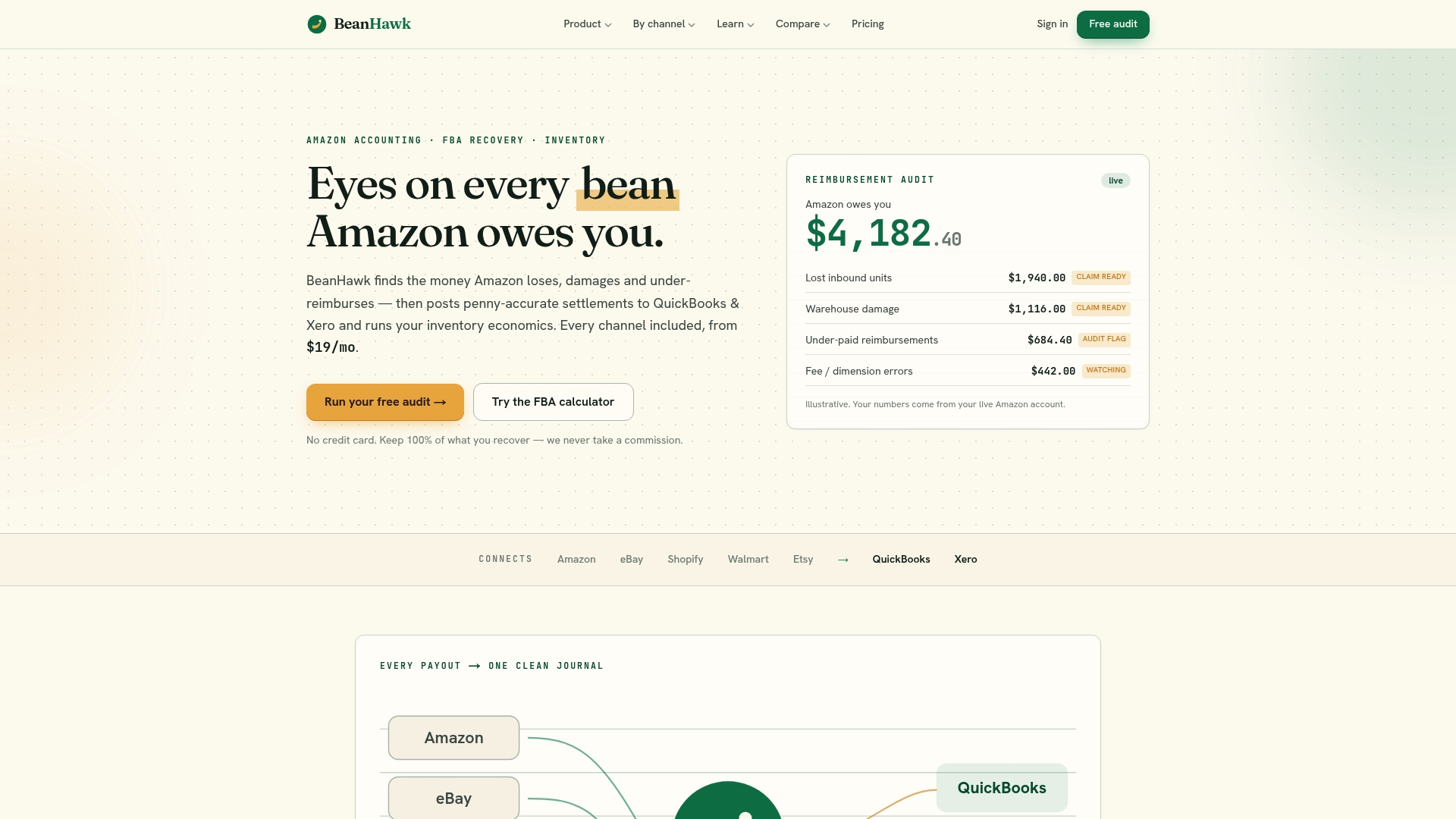
If you’ve never had your FBA ledger audited for missed reimbursements, start with the free FBA reimbursement audit. It costs nothing to see what’s sitting unclaimed. From there, plans run from a Free tier up through Starter at $19 per month, Growth at $49 per month, and Scale at $99 per month, all detailed on the pricing page, so you can match the plan to your order volume instead of overpaying for features you won’t use.
This article is general information, not a substitute for advice from a qualified financial advisor. Consult a qualified financial professional about your own circumstances before acting on anything here.
Sources
- Amazon Seller Wallet | Sell on Amazon
- Get paid faster with Express Payout - Sell on Amazon
- Functional Currency Determination (IRS practice unit) - IRS
FAQ
Is the Amazon Currency Converter Better Than Seller Wallet?
Neither is universally better. ACCS suits sellers who want fully automatic conversion and deposit with no manual steps, while Seller Wallet suits sellers who want to hold balances, pay suppliers directly in USD, and control transfer timing themselves.
How Often Does Amazon Pay Sellers?
Standard disbursements follow Amazon’s set cycle, but Seller Wallet lets you schedule transfers weekly, bi-weekly, or monthly instead. Eligible US sellers can also opt into Express Payout for deposits within 24 hours, including weekends, on eligible transactions.
How Much Is 1 USD on Amazon?
Amazon doesn’t set a fixed USD conversion rate. It applies a rate from its third-party provider on the day you initiate a transfer, and that rate is visible before you confirm the transaction, with some currencies using flat-rate pricing instead.
How Do I Change My Amazon Currency to USD?
If you’re paid in a local currency through ACCS or standard disbursement, you can typically switch your deposit method in Seller Central’s Payments Dashboard, or use Seller Wallet to hold and convert USD balances on your own schedule. Check your account’s currency options under Payment Settings to confirm what’s available for your marketplace.
Does Beanhawk Help With Multi Currency Payout Reconciliation?
Beanhawk doesn’t process payouts, but it automates settlement posting to QuickBooks and Xero so multi-currency deposits reconcile accurately against your Amazon ledger. It also monitors continuously for lost or under-reimbursed inventory that can otherwise hide inside converted settlement totals.